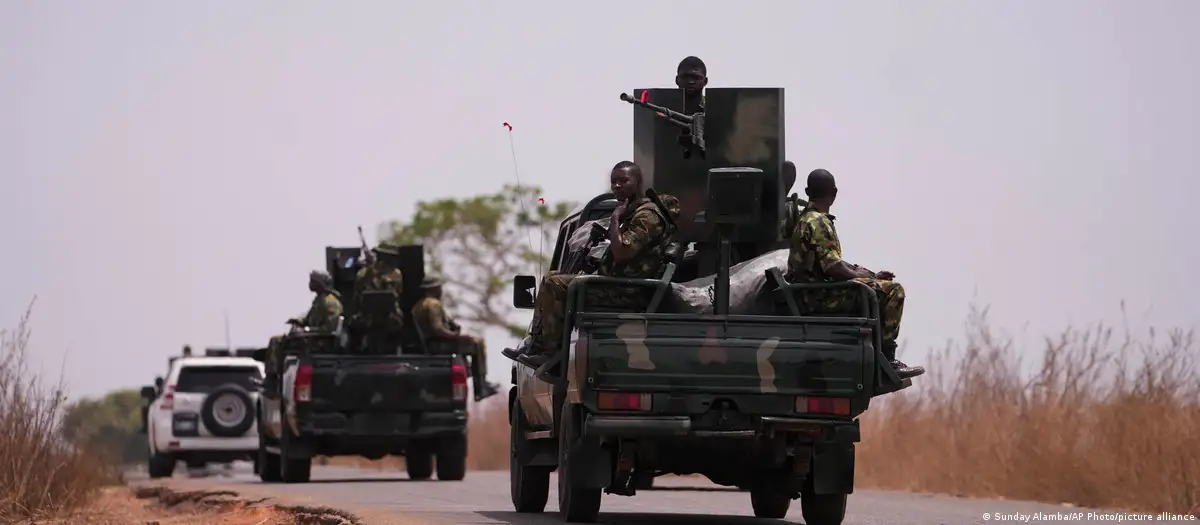
Africa, just like any other parts of the world struggles with the question of security and stability.
According to the Council on Foreign Relations’ Conflicts to Watch in 2026 report, several ongoing and potential conflicts on the African continent remain significant sources of instability in the year ahead.
The Preventive Priorities Survey (PPS), which assesses likely political and military contingencies that could affect global peace and security, highlights risks with varying degrees of likelihood and impact.
The report’s findings underscore why policymakers and regional stakeholders should closely monitor these flashpoints.
Civil war in Sudan
An intensification of the civil war in Sudan is listed under Tier II contingencies with high likelihood and potentially severe humanitarian consequences.
Experts warn that the conflict between rival military factions could lead to further mass atrocities, widespread displacement, and spillover violence affecting neighboring countries.
Sudan’s protracted war has already generated one of the world’s worst humanitarian crises, with millions forced from their homes and civilians bearing the brunt of the fighting.
Renewed fighting in South Sudan
Further election delays in South Sudan are also flagged as a high-likelihood, low-impact conflict risk.
Continued political stagnation and factional tensions may reignite clashes between armed ethnic and political groups, undermining fragile peace efforts and exacerbating insecurity in the world’s youngest nation.
Insurgencies and terrorism threats in Nigeria
The report identifies rising insurgent activity across parts of Africa as a moderate-likelihood concern.
Growing Islamist terrorism and persistent state weakness in northeastern Nigeria continue to fuel insecurity, hampering governance and endangering civilians.
Although ranked in Tier III due to comparatively lower impact on U.S. interests, these conflicts contribute to sustained regional instability and cross-border criminal activity.
Ethnic, political violence in the Democratic Republic of Congo
Conflict over territory and natural resources in the Democratic Republic of Congo (DRC) remains an ongoing source of concern.
Armed groups, including militias with external support, continue to challenge state authority, especially in eastern provinces.
These clashes have triggered displacement, disrupted livelihoods, and complicated peace efforts in Central Africa.
Sahel insurgencies
Growing insurgencies across the Sahel—particularly in Mali and neighboring states—are also highlighted as moderate-likelihood, low-impact threats.
These movements exploit weak governance and economic hardship, deepening cycles of violence that reverberate across national borders and strain fragile security institutions.
The CFR report’s focus on these African conflict zones reflects both the persistence of long-running wars and the potential for renewed violence in areas experiencing political transition or institutional weakness.
These conflicts not only shape domestic and regional security landscapes but also contribute to broader humanitarian and geopolitical challenges in Africa.































Comments
Sign in with Google to comment, reply, and like comments.
Continue with Google